Once again, my dear guitar companions, we sojourn down the tractless road of another crazy tone quest. As we leave our driveway, we hear playing in our heads the sound of a vintager amplifier that we've heard on many, many vintage recordings. This time I'd like to find one of these amps but I really want to avoid throwing down a pile of cash on a good vintage example, only to throw down another pile of cash to blueprint restore the amp, and then have to treat the resultant reconstruction like the museum piece a fifty-year-old amp is at this point. And so once again, I begin to wonder if it is possible to find something in the modern era that will provide a vintage sound without needing a whole lot of processing or modification.
For some reason, part of the way down this particular road I began to have an ancient rhyme go through my mind. Every young bride has this particular rhyme planted in her head as she dreams of her wedding: Something old, something new, something borrowed, something blue. It is traditional to include an item from each group mentioned in the rhyme in a young lady s wedding accoutrement in order for her to have luck in her marriage. My lovely wife did it, even though she doesn't particularly believe in luck. You ll eventually see why that rhyme occurred to me on this journey
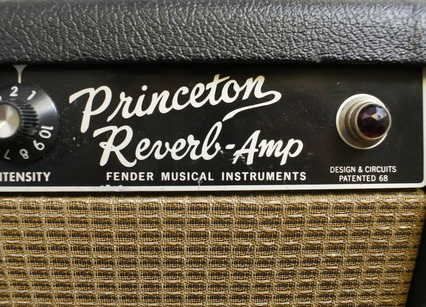
Courtesy Vintage and Rare
The object of today s tone quest is the oft-recorded Fender Princeton Reverb Amplifier. In its most popular vintage guise, the Princeton Reverb was an all-tube, 12 watt, fixed bias, 6V6 pair, class A-B, push-pull, tube rectified, 10 speaker, single channel combo amp with spring reverb and tube tremolo. It s versatility and features helped it serve in many, many recording studios because it was loud enough to work well in sessions but quiet enough to allow you to push it into power tube distortion without mowing down everyone within a fifty-foot radius. When I was young, various versions of this amp, new and old, sat in all the guitar shops. I must have checked out a hundred guitars on one or another Princeton Reverb.
As with just about all classic Fender amps, the Princeton Reverb has a murky, shifting past: Debuted in 1951, the first named Princeton Amp was marketed as an upgrade from the original, one-knob Fender Champ. Fender added an extra preamp stage and a tone control to the Champ to create the Princeton. At this point, Fender amps had no reverb or tremolo. In 1961 a new version of the Princeton came out with two-6V6 tubes in its push-pull power section and an added tube tremolo. This incarnation was marketed more like a junior version of the Tweed Deluxe than an upgrade Champ. In 1964, separate bass and treble tone controls were added and the amp was trimmed out in the classic Blackface cosmetics. There were two models: the Princeton (with no reverb) and the Princeton Reverb. The no-reverb version didn t sell well and was eventually discontinued. The few extant examples have since become favorites with collectors. You may have heard the Blackface Princeton being played by Ed King on several cuts on Lynyrd Skynyrd's Second Helping album.
Fender marketed the new Princeton Reverb as their first full-featured amp as you moved up the Fender product line from the bottom. In 1965, CBS bought the Fender Company and began making a series of changes to the line of amplifiers. In 1967 they introduced the new Silverface cosmetics with black lines between the amplifier s control sections and a grille cloth surround that became known as the drip edge or drip rail. Within a short while the black lines and drip edge were gone and the amps were slowly modified to increase clean headroom as well, a change that no-one seemed to like. Eventually Randall Smith took a Princeton Reverb Amp and heavily modified it for greater input gain and amplifier power and that became the Mesa Boogie Amp.
Germaine to this current tone quest is the fact that in 2008, Fender reissued the 65 Blackface Princeton Reverb amp with the same circuit as its predecessor, but this time housed on a printed circuit board. Word on the street was that they got it right. For many it was instant happiness. However, things have only become more and more confusing since then. First, in 2013, Fender released the Vintage Modified Series, a group of classic amps with popular modifications and Silverface cosmetics that included the '68 Custom Princeton Reverb. Then they released a limited edition of the 65 Reissue with a 12 Alnico Jensen P10Q speaker and lovely Bordeaux red cosmetics. Then they released a limited edition version of the 68 Custom with 10 Celestion Greenback speaker so often found in Marshall amps and with blue tolex. Not enough? They next released a Black and Blue version of the 68 Custom with all-black cosmetics and a 12 Celestion Blue speaker as was standard in the Vox amplifiers.
And now some disclaimers: Firstly, Fender amps have always been slightly at odds with me. It seemed to me that you had to really lean into them, and I mean cream their front end, to get a fat, meaty tone. At lower levels they just seemed a little anemic and ice-picky to my ears. Secondly, I am a sucker for anything red I m drawn like a moth. Thirdly, my first serious amplifier back in 1974 was a Silverface Fender Bandmaster. As a result, I have had a soft spot in my heart for the much-maligned Silvers ever since. I didn t particularly like the sound, I just have one of those nostalgic soft spots. And fourthly, my first personal contact with a bandmate's Blackface Fender Princeton (no reverb) back in the 70s was underwhelming to say the least. I tried a million ways to Sunday to get a decent sound out of the thing with my Les Paul and never succeeded. Chalk it up to my inexperience if you will, but it seemed to sound stiff and thin. All this will balance out, so don t get worried.
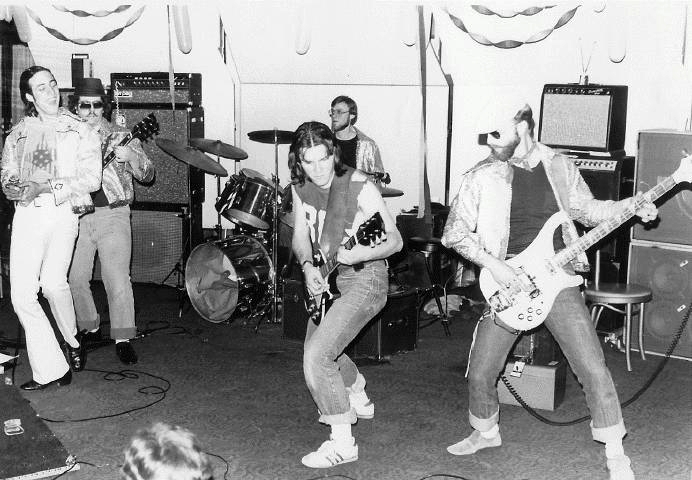
There it is. It was at least good to comedically increase the height of my stack.
I'm number 30 with the Les Paul. Dig the rabbit ears on the Princeton!
Back to the present: I m not sure what got me on a Princeton Reverb jag but it is safe to say that I ended up there. As usual, I did a bunch of research before I set the first foot in a guitar store, reading articles and listening to sound clips. I came to some conclusions about what I thought might be a good version for me and got it entirely wrong. My impression was that the Musician s Friend/Guitar Center Princeton Reverb Limited Edition 112 Bordeaux with its 12" Alnico speaker would probably suit me best. Besides, I really liked the warm red and cream visual aesthetic. So I trundled off to the local Guitar Center, grabbed a nice Les Pauls, and tried it on. Hmmm It sounded thin like the originals with the classic metallic Alnico honk added. When I pushed it up to 4 it got shrill with the classic metallic Alnico honk added. Well poo. Oh well. As a consolation I decided to check out the Vintage Modified 68 Custom sitting next to it while I was there. I fired up, spun her up to 4, and hooked up. Then I hit a note and reached up to tweak the EQ. Whomp. Low end. That little beast was moving some air through the gap between the grille and chassis and I could feel it blowing across my hand as I tweaked things. Yeowza. And no ice pick. They ve substituted a Celestion Ten 30 speaker for the Jensen C10R in the PRRI and it helps smooth things out nicely. I thought, "You know, this is pretty impressive." I dialed up the same settings on the Bordeaux and hopped back and forth. Okay, there s a vast difference in the sound of the amps more brightness from the Bordeaux, more girth from the 68. Equal settings don t do the comparison justice so I tweaked the EQs to try to meet in the middle. While they came close, I found out that I simply couldn t get enough girth out of the Bordeaux for my tastes and I couldn t dial out the honk from the Alnico speaker or the ice pick high-end without making it sound muzzy. But the 68 Silverface had lots of bottom end and had a nice smooth high end as well. Hmmm Nice.
Click to embiggnate.
And now a word about Fender's modern Vintage Modified Series: Somewhere along the way Fender finally got word that their classic designs were very much in demand but there were some key modifications that were being done to make them more useful to players. Being smart marketeers, they decided to come up with a line that added these mods so that modern players could enjoy the same sort of tone with a stock amp. So that s what those new Silverface Fenders, including the '68 Custom Princeton Reverb, are about. They are built in Fender s Ensenada, Mexico, plant on the Baja Peninsula, seventy-two miles south of San Diego. As a a result, they are priced about ten percent lower than their U.S.-built Vintage Reissue Series brethren.
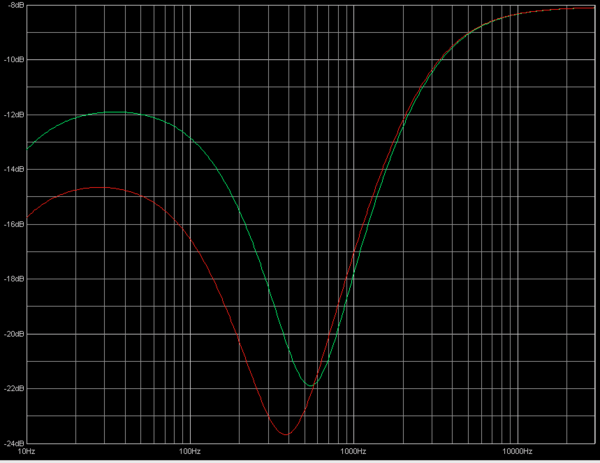
After that first session with the Princetons I went back online and dug deeper. There s a lot of info out there from some knowledgeable folks and I availed myself of it. Here s a graphic comparison of the frequency response of the 65 Reissue (red) and the 68 Custom (green):
These plots confirmed everything I was hearing. On the 65, the bass at 50hz is at -15db relative to the high end and the nearly -24db mid notch occurs around 400hz, a very important frequency range for the guitar. On the 68 Custom, the bass at 50hz is at -12db and the milder -22db mid notch has been shifted up to 550hz. The resultant frequency balance offers more fullness and body for just about any guitar that you plug in. There are other factors at play as well, and here is where the rhyme I spoke of before comes into play: Something old, something new, something borrowed, something blue.
SOMETHING OLD The amplifier is based upon the Blackface Princeton Reverb circuit. The '68 Custom Princeton Reverb is very, very close to the original circuit and the 65 Reissue - it is even built on the same printed circuit board as the Princeton Reissues.
SOMETHING NEW On the 68 Custom, Fender modified the 65 Reissue circuit to reduce the negative feedback to the power stage. Negative feedback is designed to flatten the frequency response, dampen and tighten the bass response, and decrease the amount of distortion in a tube amp. In the early 60s Fender tried to accomplish these things by increasing negative feedback. As the decade wore on, CBS/Fender changed to the Silverface cosmetics and added more negative feedback, hoping to achieve more of those goals. In this Vintage Modern Series, Fender has come to understand that some players want an amp to distort easier, smoother, and earlier on the dial than the 60s designs did. In this version they ve decreased the negative feedback and that has a side benefit in that the amplifier compresses earlier and more than it did before and is more touch responsive as well.
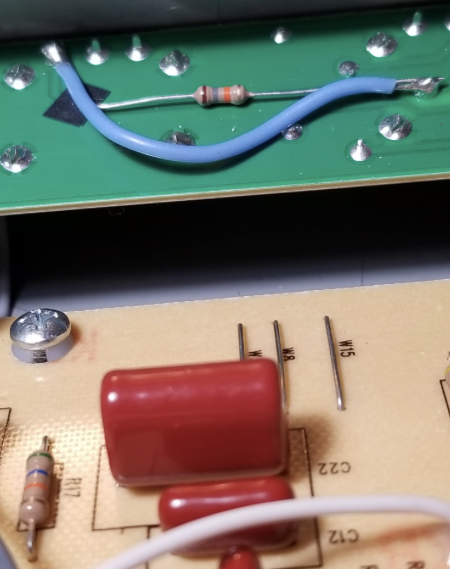
SOMETHING BORROWED You know my problems with thinness and ice pick? One of Leo Fender s amps, the Bassman, didn t have that problem. So, for the Vintage Modified Series they borrowed the frequency curve from the Bassman and applied it to the Princeton, as described above. Now here is the interesting part: the bulk of the EQ difference is accomplished on the 68 with a difference in just two resistors, one for the bass and one for the midrange. A smart operator can mod the EQ circuit back and forth between the two versions easily. But a benefit of the new tonal balance is that the amp takes pedals better than before because of its more balanced response.
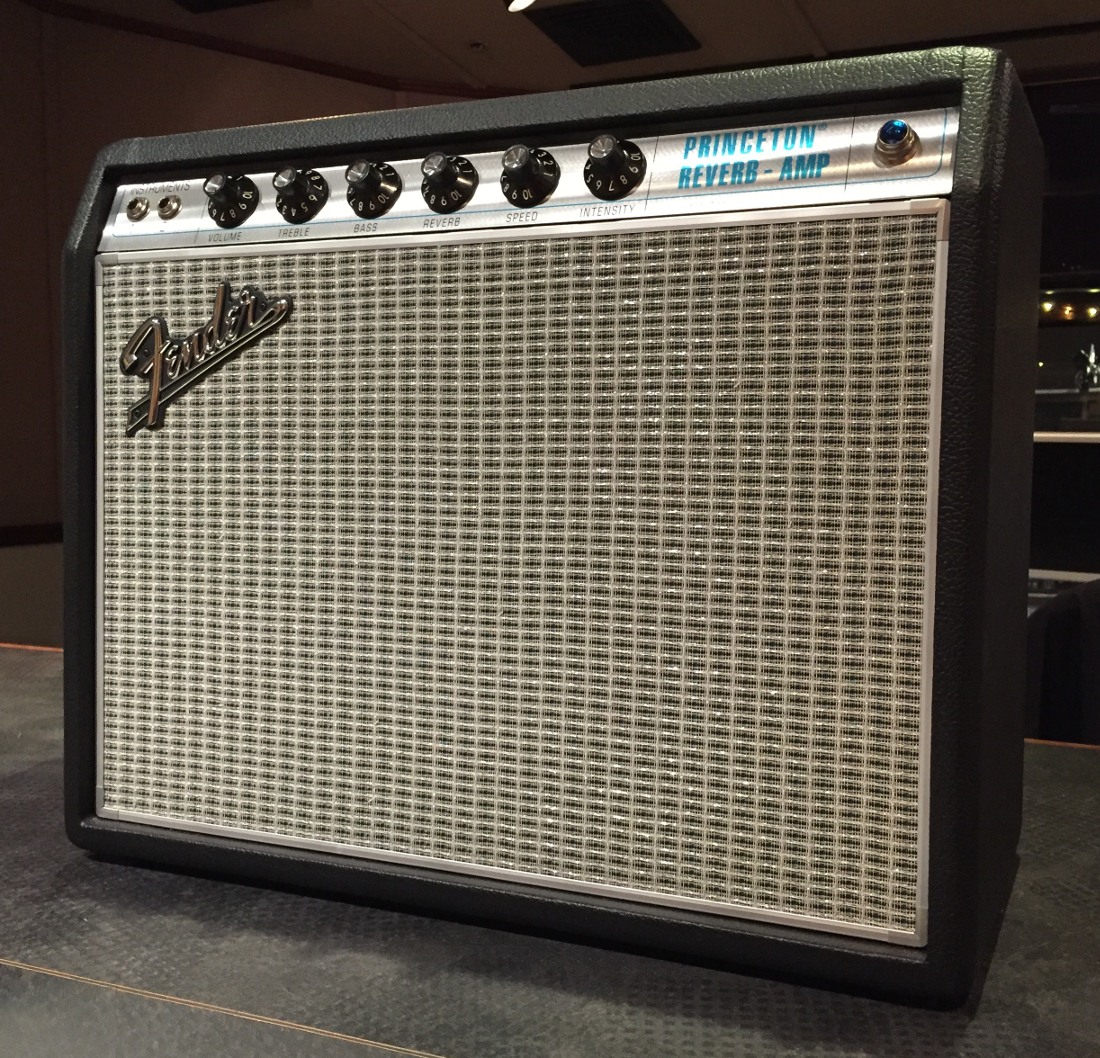
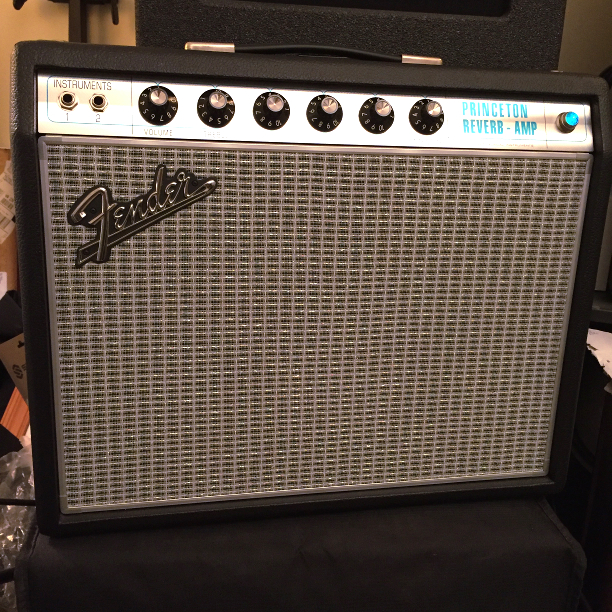
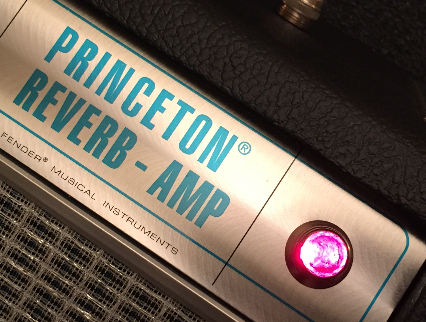
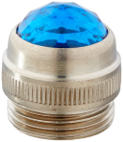
SOMETHING BLUE The visual aesthetic of the Silverface Amp involved an aqua-blue model name on the control panel as well as aqua-blue threads woven into the speaker cloth. For this series Fender also took the look a step further by changing the color of the power lamp jewel from the original ruby-red to aqua-blue as well. They also adopted the first year Silverface cosmetic features of the drip rail and the black vertical lines that separated the control panel sections. It is an ultimate irony that Fender applied this aesthetic to the Vintange Modified Series. Why? The Silverface Amps, as a group, were known as the apex of the period of increased negative feedback. Most people considered them harder and brighter-sounding than the Blackface amps. In these Vintage Modified amps they ve turned the Silverface reputation on its ear with a line that is possibly more "Blackface" than the original Blackface amps themselves.
Click to embiggnate.
So, how did this all work with my tone quest? Being a lover of all things red, I really wanted to love the Limited Edition 112 Bordeaux. But no, as I repeatedly "visited" the two amps I confirmed that the 68 Custom simply worked better for me. Besides the 68 Custom having the frequency balance and the compression or sponginess" I prefer, I felt that the tremolo sounded better on this version as well. It has a smoother slope and a deeper available volume dip. While fiddling with the trem I keep thinking about Tommy James and the Shondells Crimson and Clover and Lynyrd Skynyrd's "I Need You." I m told the increased response is a result of the decrease negative feedback on the power tubes.
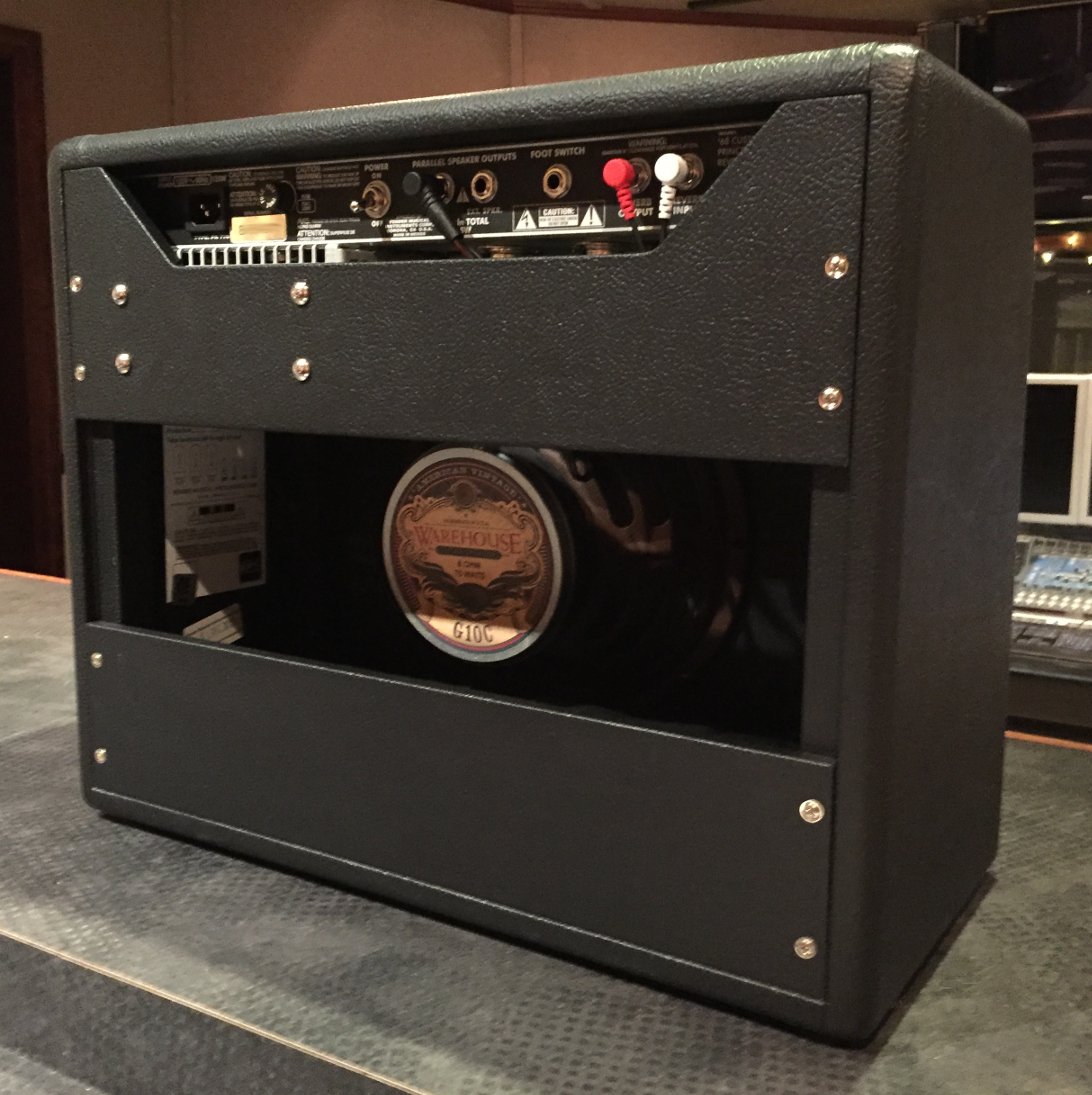
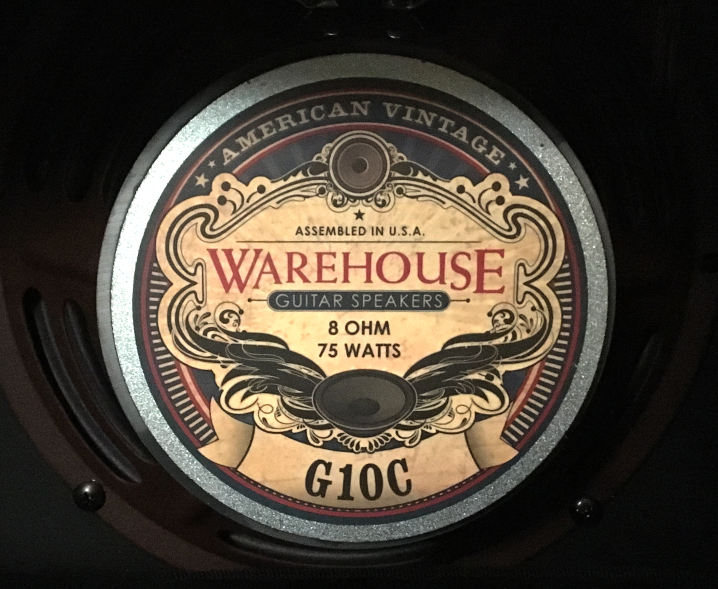
Then on one of my trips to the store while I was comparing the Princetons, a fellow walked up to me and said, I ve got one of these 68 Custom Princetons that is in mint condition and hasn't left my house. I ve replaced the stock Celestion speaker with a Warehouse American Vintage G10C speaker that has twice the power handling capability and a smoother response. I can sell you the amp at a substantial discount and throw in the original Celestion speaker as well. Decision time!
We got together at the studio where I work and I auditioned his amp. Glory and trumpets! Any reservations I had about the stock 68 Custom with the Celestion were eliminated with the addition of the Warehouse speaker. The combination is just a pinch more balanced and the speaker has gobs of headroom, eliminating speaker breakup at high volume. That's the way I like it. SOLD. I had one little adjustment to make when I got it home: the chassis of this example was set back by about a quarter-inch in the case, leaving the drip rail just a tad too far forward of the control plate. I looked at several pics, confirmed the usual alignment, loosened the screws on the bolsters, slid the chassis up into place, and tightened everything back. et voil !
Sometimes it can feel as if an amp doesn t like one guitar and really favors another. To test this on the '68 Princeton, I ve played an ES-335, a 1974 Les Paul, a 2016 SG Standard '61 Reissue Limited Edition, a 1998 G&L S-500 (hot Strat), and an American Standard Tele through this amp. The amp brought something flattering to the table for each of the guitars. It is no big surprise in the case of the Fender guitars, but with its alternate potentiometer values, the 70s Gibson Les Paul can be a bit of a problem child, becoming dark and thunky when you turn it down. Surprisingly, the amp and guitar did very well together. I suppose it is no surprise that the ES-335 absolutely loves this amplifier.
Now, how about an audible example? These days it seems you can't post a review without an audible. I found this one on YouTube and really like way this fellow is channeling Tim Pierce s tone with nothing but a garden-variety TS-9 Tube Screamer and an inexpensive long delay. Notice how he uses the neck pickup for the verses and switches to the bridge pickup for the choruses. I really like his left-hand articulation.
Specs for a Stock Example:
Footswitch: 2-Button (Reverb On/Off, Vibrato On/Off) (Included)
Voltage: 120V
Wattage: 12 Watts
Controls: Volume, Treble, Bass, Reverb, Speed, Intensity
Channels: One
Inputs: Two - (1/4", Input 2 operates at -6dB)
Speaker Jack: Two 1/4" Parallel
Effects: Reverb, Tremolo
Effects Loop: None
Cabinet Material: 7-Ply 3/4" Birch/Maple Plywood
Amplifier Covering: Black Textured Vinyl
Grille Cloth: Silver-Turquiose
Amplifier Jewel: Blue Jewel
Front Panel: Silverface Style
Handle: Molded Plastic Strap with Nickel-Plated Caps
Speakers: One - 10" Celestion TEN 30
Total Impedance: 8 ohms
Speaker Wattage: 30 watts
Preamp Tubes: 3 x 12AX7, 1 x 12AT7
Power Tubes: 2 x 6V6
Rectifier Tube: 5AR4
Amp Size: 16"H x 19.875"W x 9.5"D
Amp Weight: 34 lbs
At Home
Features for a Stock Example
12 watts
10 Celestion Ten 30 speaker
Late- 60s Fender silverface look
Modified Princeton Reverb all-tube circuitry
Handwired tube sockets
Custom-made Schumacher transformers
Warehouse Speakers G10C
75 Watt power capacity
Adds 3.5 pounds more than the Celestion (7 lbs total for the speaker)
02/19/2018 UPDATE: I've been fooling around with the amp, the ES-335, and the Analog Alien Joe Walsh Double Classic pedal. I have discovered that with a little more low-end carved out by the JWDC and a tiny bit more compression I've got a really wonderful lead sound on all three pickup settings. Like a 5E3 Deluxe, this amp can make you love your neck pickup again. Marvelous!!
11/30/2018 UPDATE: I mentioned above that my first serious amp back in the '70s was a Silverface Bandmaster. I've switched out the blue jewel for a red one just for old time's sake.
06/09/2020 UPDATE: I've been experimenting with using the Princeton with lap steel and I've found that it is excellent in this application. The more rounded response of the Princeton tends to round off much of the "ice pick" of the single-coil pickups, while still sounding quite Fender-ish. It is a marvelous little benefit from the Bassman-esque control stack. With the onboard effects it makes the amp a great little lap steel powerhouse.
 =
=