In the Recording Studio, Things Can Creep Up on You
02/12/2026
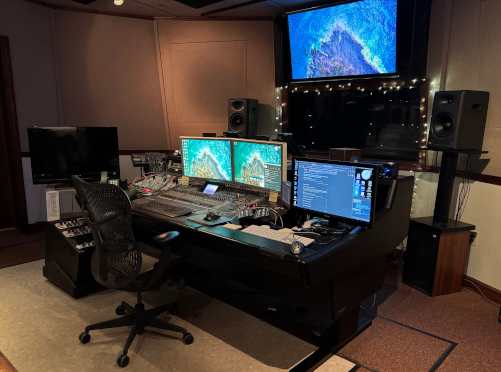
I work in a nice audio recording studio. The Live End Dead End control room is properly designed and outfitted with a pair of really nice monitor speakers that are soffit-mounted, sub-woofed, and balanced. Now, mind you, the gear isn't brand new, but it is top-flight. The speakers are UREI 813B/Cs powered by a David Haffler Trans-Nova P7000 stereo amplifier providing 375 watts per side into 8 ohms. The results are glorious.
But even in a well-designed and built room, signal chain problems can sort of creep up on you. A few weeks ago I was in a voice recording session when I heard a sound on the right side of the room as if someone was coming in the soundproof door - just a combination of a little squeak and whoosh. I turned and no-one was there. Hmmm... Okay. A couple of days later in another voice session it happened again, but this time it happened several times. I noticed that whenever it happened, the vocalist was leaning into a word for emphasis and was putting out sibilants. I run only about 3db of tube/optical compression on voices while recording, just enough to keep me out of peak trouble, and I don't push the recording levels up to where overload is much of a threat anyway. That pretty much eliminated recording overload as the problem and cause here, but it also left some reasonable transients in the signal. After the second session I put up some music with a good high-hat on the right and turned it up. Nothing.
So I reloaded the recording session files on the DAW and played back the voice passages we were working on. Bam! There it was. Apparently the transients from a live voice contained enough energy to trigger the problem but a high-hat didn't. Okay, it was time to walk the signal chain. I exchanged output channels at the DAW. No change. One by one I exchanged channels, buses, and monitor outputs at the console. Nope. Finally, I exchanged amp outputs. Bam! The splatty sound moved to the left speaker. The problem was the right amp channel. Again.

An incident of this sort nearly drove me crazy about five or six years ago with me wondering if the tweeter in the right speaker was cooked. I did the same tests on the signal chain and discovered that it was the same right-hand channel of the very same amp that was now giving me fits in this present circumstance. My control room features five of these Haffler amps that are located back in the machine room that power both the main array and the various channels of the surround array. Five years ago we just moved the cables for the main array over to one of the surround amps, balanced up, and whisked the defective amp away for a quick repair.
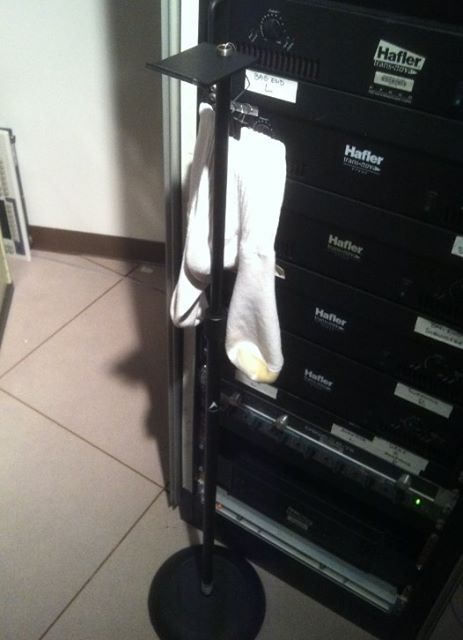
With five of 'em going you can dry your socks on snowy days!
Buzzzzt!!! Big mistake. While the amp was being diagnosed, I got a call to mix a surround product. Whoops! We had to scramble to get the amplifier repaired and back by session time. For video programs, a stereo mix is usually generated along with surround mixes, and we need both arrays to evaluate both mixes.
This time there didn't appear to be a surround gig on the horizon, so again we popped out the amp from the rack and rewired the system to a surround amp and sent the amp to the in-house repair shop. Once I got the system fired up and balance I was amazed how much distortion had crept up on me in that right channel with the previous amplifier. It really does creep up on you. You spend a while with a red light flashing in your brain but saying "Is it me?" With a substitute amp now in place the whole array sounded far cleaner. Distortion is the enemy of clarity. This time, however, with the amp in the shop, there were new circumstances that militated for more preparation: our repair engineer who handles electro-mechanical devices and power devices had just retired and there wasn't anyone in the shop who could do this sort of diagnosis and repair right. Add to that the fact that David Haffler, Inc., the amp’s manufacturer, went out of business a while back, and you've got a pickle: if a new project showed up, how would we handle it?
While I was mulling options to prevent a surprise and scrambled it occurred to me that another suite in the building had been decertified for surround and has, you guessed it, a stack of five of these same amps sitting idle. Those amps had far fewer hours on them than mine. I enlisted the help of a repair engineer. We tiptoed into that suite's machine room and pinched one of the spare amps! After getting my room working again I reported the switch to management and they approved. Sometimes it is better to ask forgiveness than permission.
So now, after balancing up, I'm sitting in the control room between sessions with tunes on listening to clean, clear sound once again. I am confident that once again I can handle anything that comes through the door and have been given time to chase down someone who works on these amps. I've got a pretty good lead on a place in Florida.
Meanwhile I'll be much more diligent in listening for monitor system creep.
= =
=