When a Neumann U-47 Was Just the Wrong Microphone for the Job
A lesson in signal frequency management
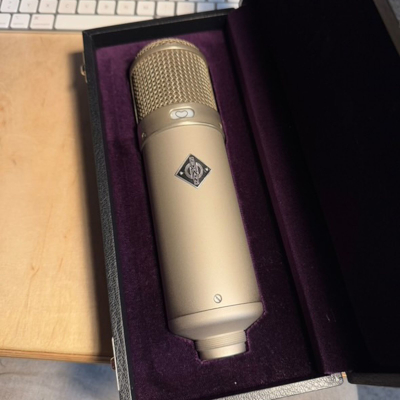
Neumann U-47
05/07/2026
Back in the 1980s, the media company where I worked came into possession of a lovely 1950s Neumann U-47 microphone. One of the primary activities of our company was a large cable TV network. This was back in the ascendency of cable TV, when it was becoming the primary supplier of entertainment and information. Most cable networks supplied their programming to local cable companies via satellite up- and down-links, and we were no different. We had made a name for ourselves with the high quality of our signals and this mic offered us the chance to raise the bar on our announcer's recording quality. We audio engineers were tasked with creating recording studio quality voice recordings for the network "look". That's the package of mixed show promos as well as voice announcements that run under the end music and credits of shows to tease what is coming up next and throughout the schedule.
This was after networks had transitioned out of "booth announcers" who sat in vocal booths all day and read the teases live to air. Instead, our announcers were on staff as "prom prods", promo producers. They wrote much of their own copy and then booked a long session where they recorded ALL the voiceovers for the look that week. I worked many, many of those sessions. The recorded VOs were then either mixed into promos or rolled over the tails of shows by the Broadcast Control (BX) operators who sent the continuous feed of our network to the satellites that passed the network on to the local cable providers.
Our primary VO talent was a gentleman who had been a star on Los Angeles radio durnng the 1930s. He served as a communications specialist with the 2nd Marine Regiment of the 2nd Marine Division during WWII and was part of the bloody Battle of Tarawa. He went on to Voice of America in Europe and then worked as a booth announcer for a TV network before joining us. He had a fantastic voice, the rich, full voice of a man who had smoked a pack of cigarettes per day for decades. His voice was FULL of overtones and had a "happy command" of the airwaves whenever his voice rang out, and he was a good friend, a fun raconteur, and general character during our sessions.
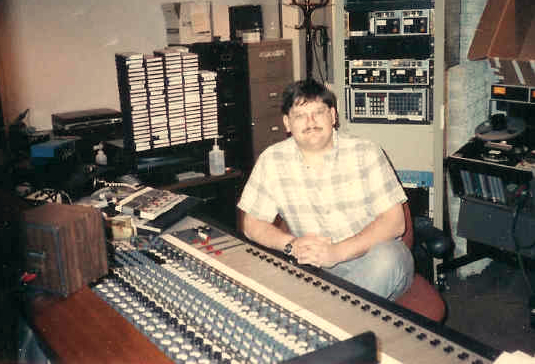
At my desk in that period. Those are individual VO tapes in the background.
We had the U-47 serviced by a specialist and immediately put it to work as our premier instrument for voiceovers. We applied the 2254/A limiters in our Neve 8028 console to prevent peaks and ran our levels at just short of 0 VU referenced to a conservative 320 nanowebers/meter on Ampex 456 tape to prevent distortion. We were taking all steps to create a really high-quality, nice-sounding product.
However, somewhere along the line we began receiving complaints from local cable providers of distortion in our VOs. That, of course, triggered much suspicion and raising of eyebrows in management. A signal chain review was immediately initiated from the booth to the home TV. I followed the chain, and sure enough heard distortion in the final delivery of our product on our local cable provider. Our investigation started with the mic, then the console, then the tape decks, then our monitors. Now I, as an engineer on the sessions, was concerned with all of this as the product was recorded and I realized that my reputation as an engineer was on the line. The auditing engineers in charge of the investigation found that our signal was absolutely spotless as it left our studio. They followed the product through editing suites where the promo spots were edited and mixed as well as the dry VO recordings that went directly to BX. They checked the product coming out of the BX switcher and going to the satellite. Clean as a whistle.
But when they took a return feed from the satellite, there it was, there was distortion on the voiceovers. That's what multiple providers were hearing. That was unacceptable, and lowering the signal level of voiceovers was also unacceptable because, believe it or not, the loudness wars existed in broadcasting long before even this incident happened. At this point we had found the place where the distortion was being introduced: the satellite transponder. Next it was time to find out the why. We got in touch with the satellite company, a highly professional bunch, and asked what was up. They told us they didn't have any complaints from any other networks so they assumed the problem was with us. We pressed them, and somewhere along the way our auditing engineers asked them for the technical specs of their satellite transponders. The transponder is a package of a receiver and a transmitter that receives the signal from an earth transmitter and antenna dish and turns around and transmits it to another earth dish and receiver. Therein lurked half of the problem.
Our Neve console 1073 preamps and bus amps offered 20db of clean peak headroom response over 0vu and our Ampex ATR-102 tape decks offered 10 to 15db of headroom. Over that, they gently transitioned into a pleasant bloom of harmonics before getting nasty. By contrast, the satellite transponders offered only 3db of headroom at best and transitioned directly to inharmonic, nasty distortion. That was the state of the art for early 1980s satellite technology. That disparity pointed us back to the content of our recordings which eventually pointed to the frequency response of the microphone we were using.
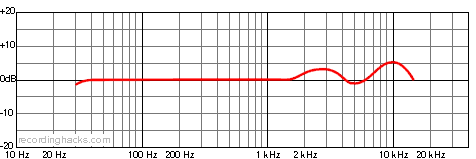
U-47 Cardioid Frequency Response Plot in Cardioid
Do you remember the design objective of the Neumann U-47? The mic was designed to allow a vocal soloist to stand in front of an orchestra and have everything suitably reproduced with a single microphone. How did it accomplish this task? Neumann engineers designed in a pair of 5db frequency response peaks at 4000hz and 10khz that lifted the vocalista right out of the mud of the orchestra. That's what gives the mic its rich character and makes it so beloved. But remember, our metering was via VU meters measuring the entire signal spectrum from 20-20khz and averaging out all frequency bands into a single report. It was possible to have a 0 vu report and still have parts of the spectrum far above that level. THAT was the problem. At that point in recording history, audio spectrometers weren't widely available so we didn't have them at our mixing consoles. We managed spectrum content via our ears and sought for the signal to be euphonic. These days, every reasonably-developed EQ plugin has a spectrograph that displays underneath the controls or the EQ curve for the plug.
1980s Solutions? We tried pulling back on the high-mid and high frequency areas of the mic's response via equalizers. It stopped the distortion but yielded a muddy-sounding VO. As a temporary fix, the department employed an AKG The Tube (now C12VR) condenser mic. I didn't care for the mic's sound in this application because the upper mids sounded "papery" to me but it did control the high end and mids to the point where they didn't distort the transponder. The cries of protest were silenced. As soon as we could we moved into sets of Neumann TLM-170 condensers for all our suites that both had a better sound to my ears than The Tube and still controlled the band-dependent boost. The TLM-170 has a very smooth frequency response with a small dip around 4khz and sounds great in many applications. Would this situation occur these days? Probably not. Transponder technology has come a long way since then.
This situation provided some interesting lessons to those who will learn:
1. There is no perfect microphone and that includes the venerable U-47. Application mismatches can happen with even legendary mics.
2. Broadband level and band-specific level are two very different things. They coexist, and can be in conflict. This is why if you watch a professional engineer work with EQ, he will often be more restrained in boosting frequencies and far more comfortable reducing other and adjacent frequencies that are masking the frequencies that seem lacking.
3. Keep track of the headroom available from your entire signal chain. That includes the delivery chain, even if it is offsite to you.
So, there you go: some extremely valuable lessons in a nutshell. I learned these lessons early in my career from this and other incidents, and they have served me well. Oh, and I still love the U-47.
= =
=